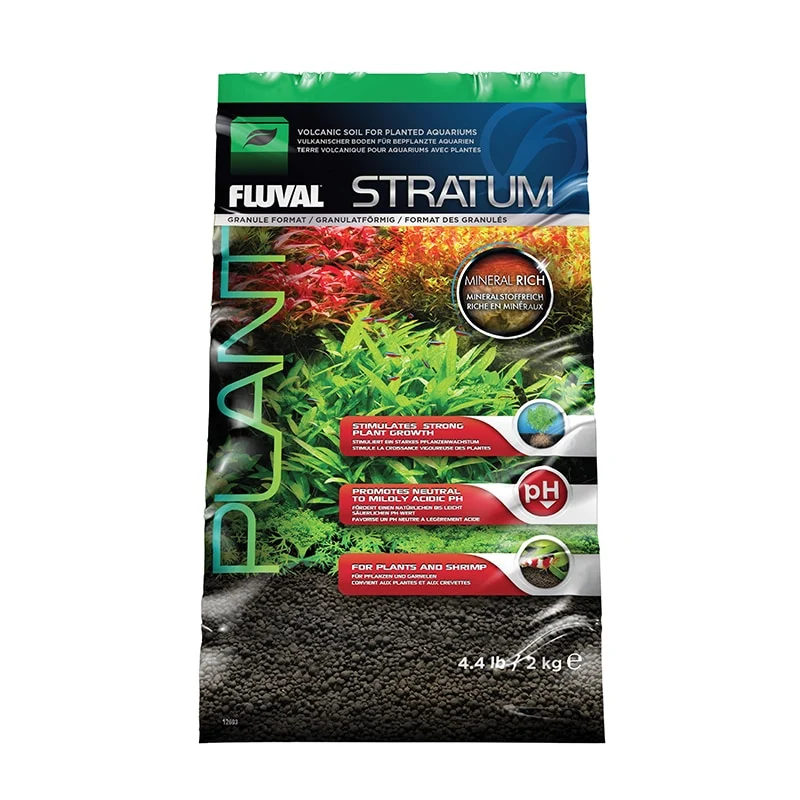
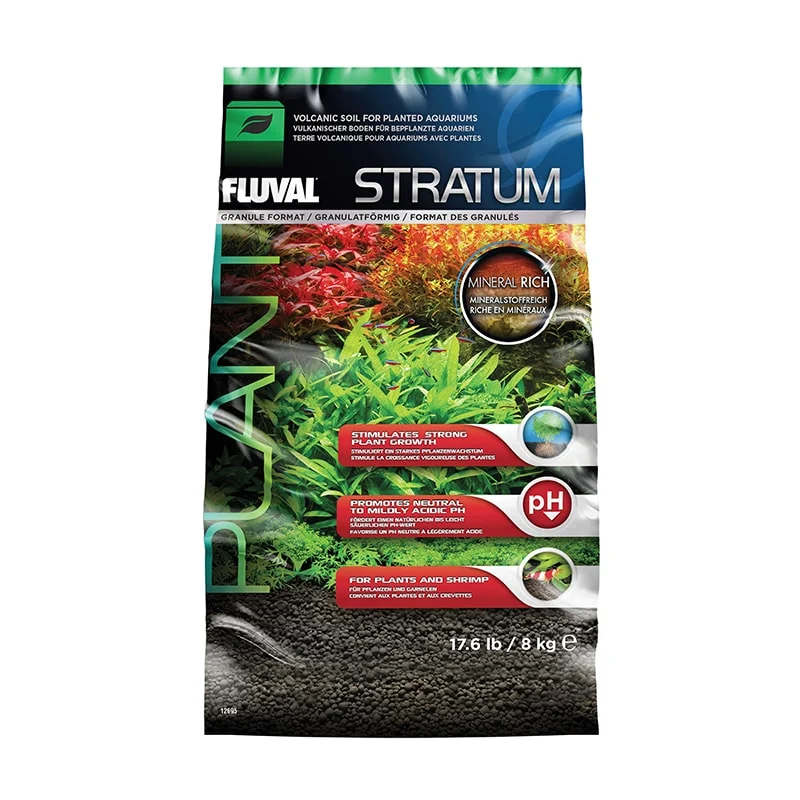
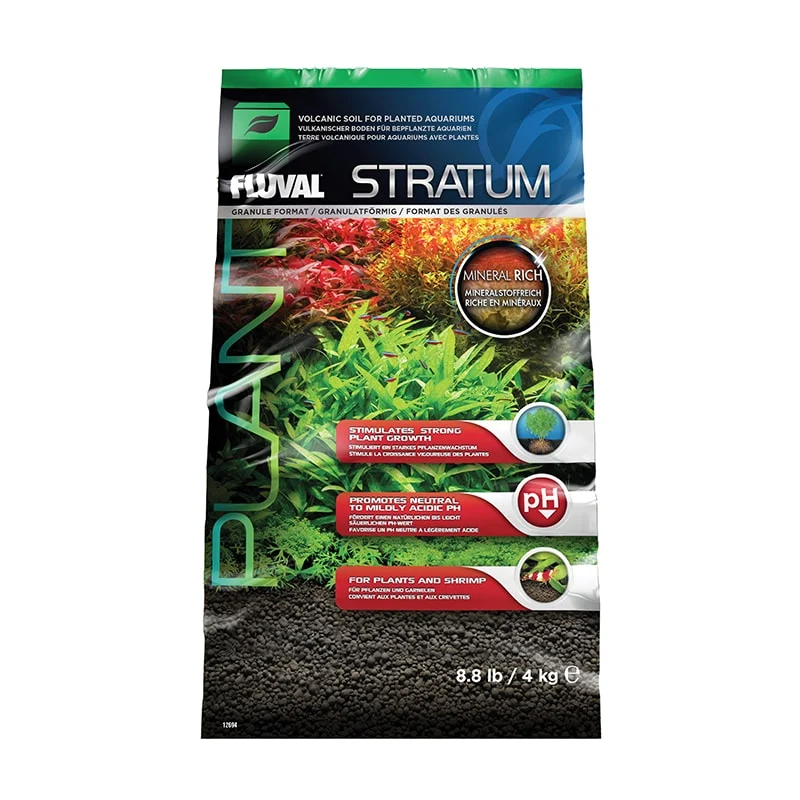
Fluval Plant & Shrimp Stratum 8kg
Item Number: 12695
UPC Code: 015561126939
Description
Collected from the mineral-rich foothills of Mount Aso Volcano in Japan, Fluval Stratum makes an ideal alternative substrate for planted aquariums and those featuring shrimp.
Related Products
Features
- Encourages strong plant growth – roots easily penetrate and spread throughout substrate to obtain key nutrients
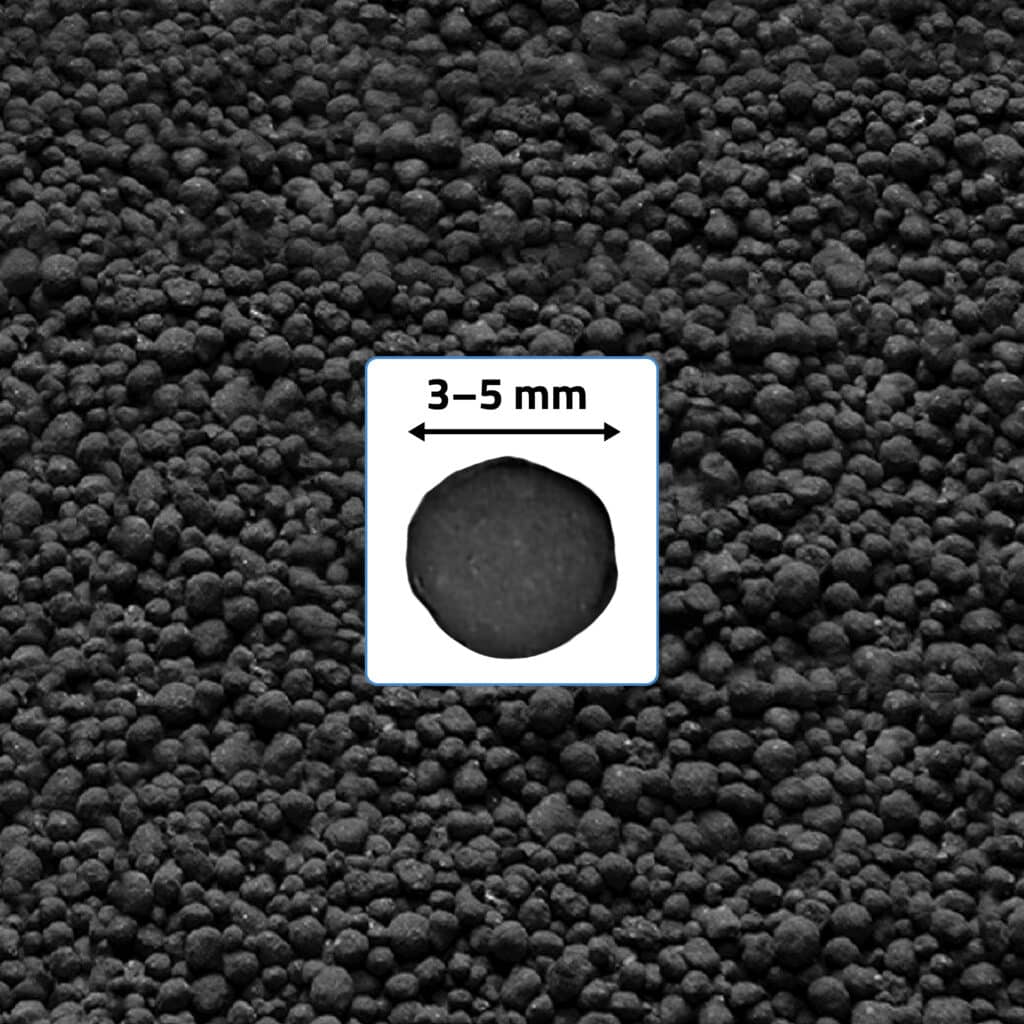
- Porous structure allows for rapid colonization of beneficial nitrifying bacteria
- Helps support neutral to slightly acidic pH – ideal for most plants, tropical fish and shrimp normally kept in planted aquariums
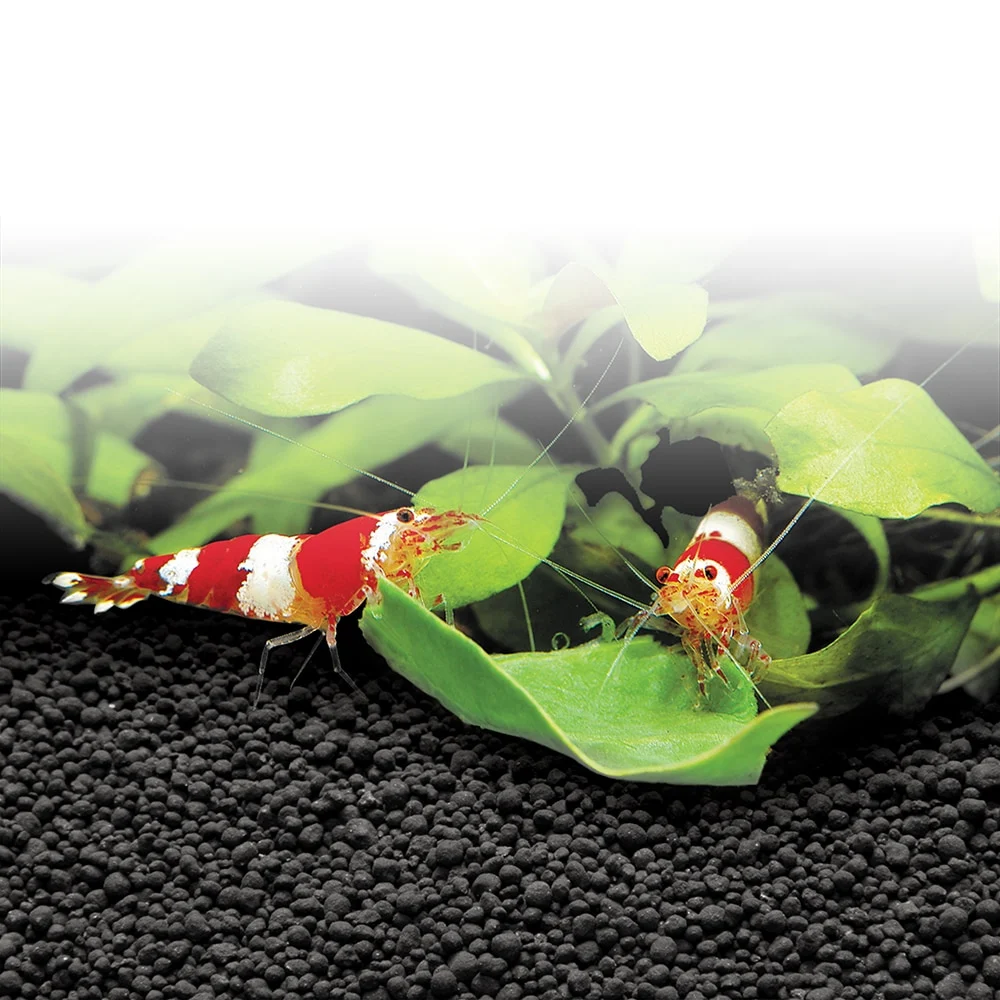
- Provides newborn shrimp with a refuge from predators until they are large enough to emerge
- Will not discolor water and helps control organic discoloration when natural driftwood is present
- For use in freshwater aquariums
Questions & Answers
First, measure your tank’s length and width in cm – for example, 90 x 60 cm. Then, consider the thickness of substrate you want – for example, 8 cm. The amount of Stratum you need (in kg) is equal to length x width x thickness divided by 1000. In our example, 90 x 60 x 8 / 1000 = 43.2 kg of Stratum needed.
We recommend gently rinsing Stratum in a large colander or similar device without agitating the substrate to remove fine dust particles.
Stratum is a natural soil product, and like any other organic matter, adding it to an aquarium has the potential to slightly increase ammonia levels. If the aquarium is established, this should not present a problem. We recommend using an Ammonia Test Kit (Item #A7869) to ensure your aquarium is safe for fish.
It’s likely that your water is very soft and has a low buffering capacity.
It’s likely that your water is very hard and has a high buffering capacity.
It’s safe to mix Stratum with other soil substrates, such as Bio-Stratum. We do not recommend mixing Stratum with any other substrates, as they can cause Stratum to break down prematurely.
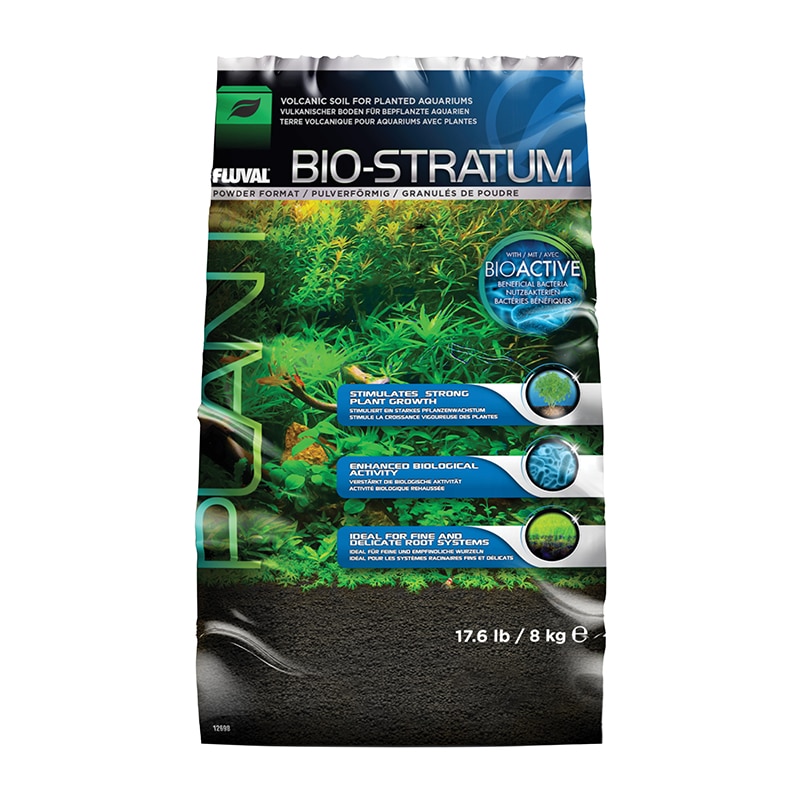
Consider adding a layer of Bio-Stratum on top, which features smaller granules to help new plants with undeveloped root systems establish themselves. For plants with particularly fine roots, the dry start method is recommended.
We do not recommend cleaning Stratum like gravel or sand, as doing so will cause the soil to break down prematurely. Instead, hover a small gravel vac over the substrate while gently stirring up surface detritus with a turkey baster or your fingers.
The pH of Stratum is mildly acidic, and over time slowly impacts the pH of aquarium water. Note that the buffering capacity of the water influences the soil’s effect on it: if the aquarium KH is moderate, the water will remain more neutral, and if the aquarium KH is low, the water will become more acidic.
Stratum contains humic acids, which naturally clears water of organic discoloration.
First, measure your tank’s length and width in cm – for example, 90 x 60 cm. Then, consider the thickness of substrate you want – for example, 8 cm. The amount of Stratum you need (in kg) is equal to length x width x thickness divided by 1000. In our example, 90 x 60 x 8 / 1000 = 43.2 kg of Stratum needed.
We recommend gently rinsing Stratum in a large colander or similar device without agitating the substrate to remove fine dust particles.
Stratum is a natural soil product, and like any other organic matter, adding it to an aquarium has the potential to slightly increase ammonia levels. If the aquarium is established, this should not present a problem. We recommend using an Ammonia Test Kit (Item #A7869) to ensure your aquarium is safe for fish.
It’s likely that your water is very soft and has a low buffering capacity.
It’s likely that your water is very hard and has a high buffering capacity.
It’s safe to mix Stratum with other soil substrates, such as Bio-Stratum. We do not recommend mixing Stratum with any other substrates, as they can cause Stratum to break down prematurely.
Consider adding a layer of Bio-Stratum on top, which features smaller granules to help new plants with undeveloped root systems establish themselves. For plants with particularly fine roots, the dry start method is recommended.
We do not recommend cleaning Stratum like gravel or sand, as doing so will cause the soil to break down prematurely. Instead, hover a small gravel vac over the substrate while gently stirring up surface detritus with a turkey baster or your fingers.
Stratum needs to be replaced over time as the nutrients are depleted and the soil compacts. The required replacement frequency varies depending on the type and amount of plants – in general, we recommend replacing the soil every 1-2 years.
The pH of Stratum is mildly acidic, and over time slowly impacts the pH of aquarium water. Note that the buffering capacity of the water influences the soil’s effect on it: if the aquarium KH is moderate, the water will remain more neutral, and if the aquarium KH is low, the water will become more acidic.
Stratum contains humic acids, which naturally clears water of organic discoloration.