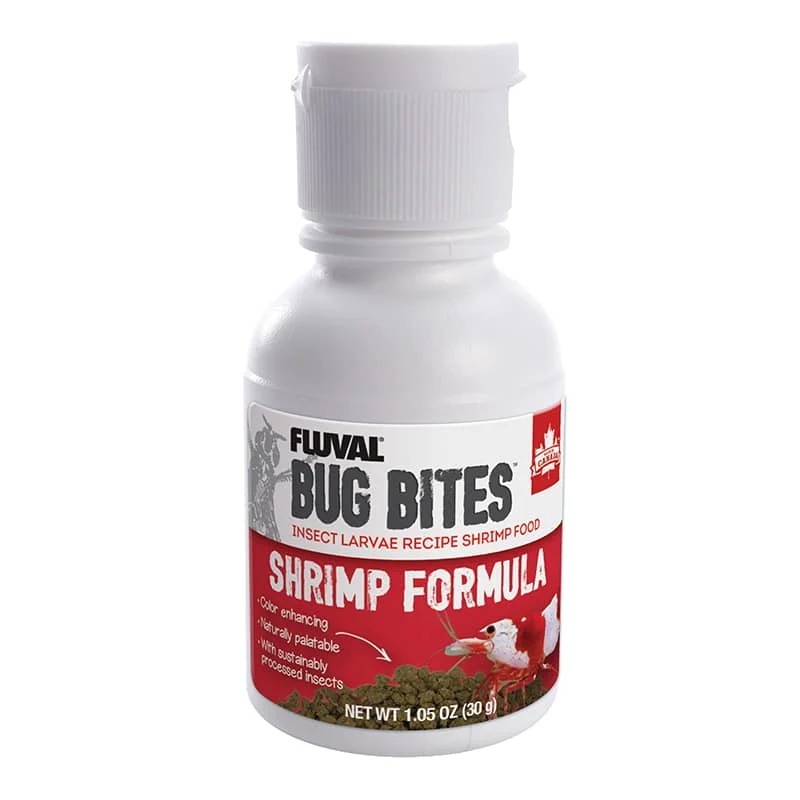
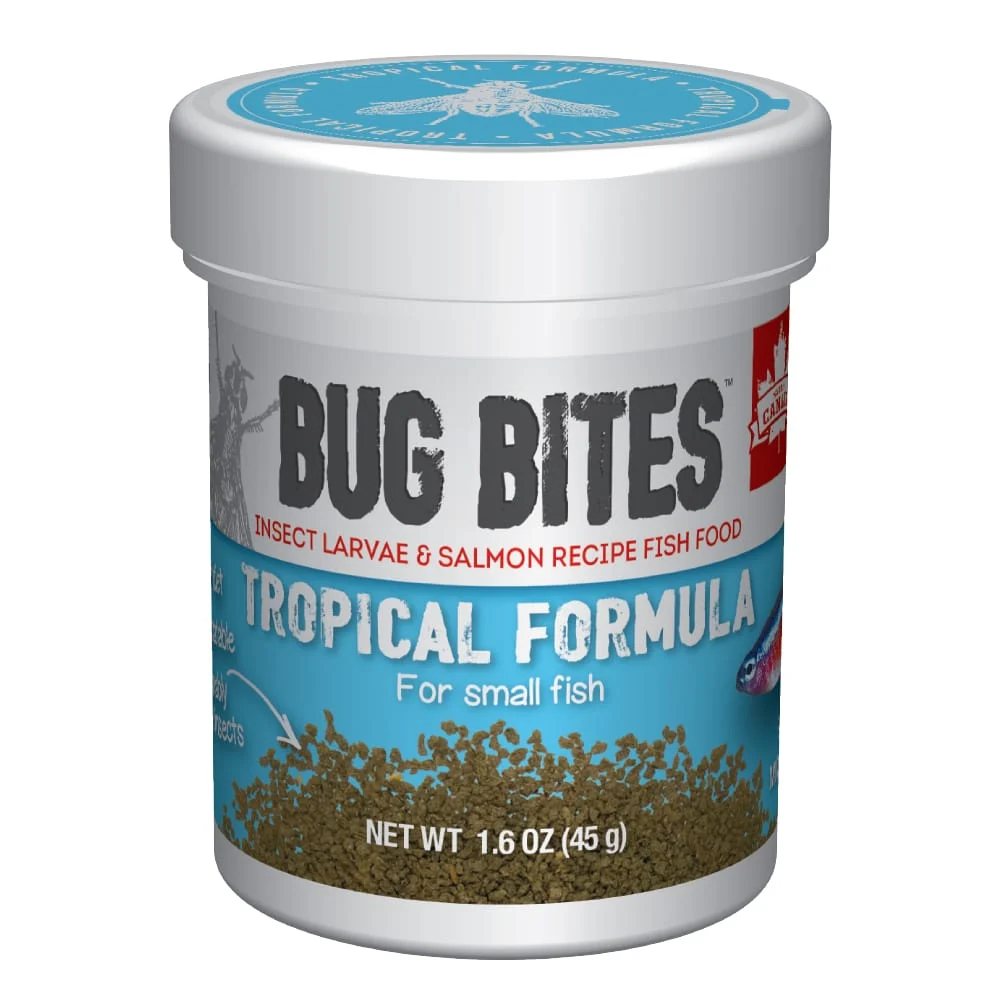
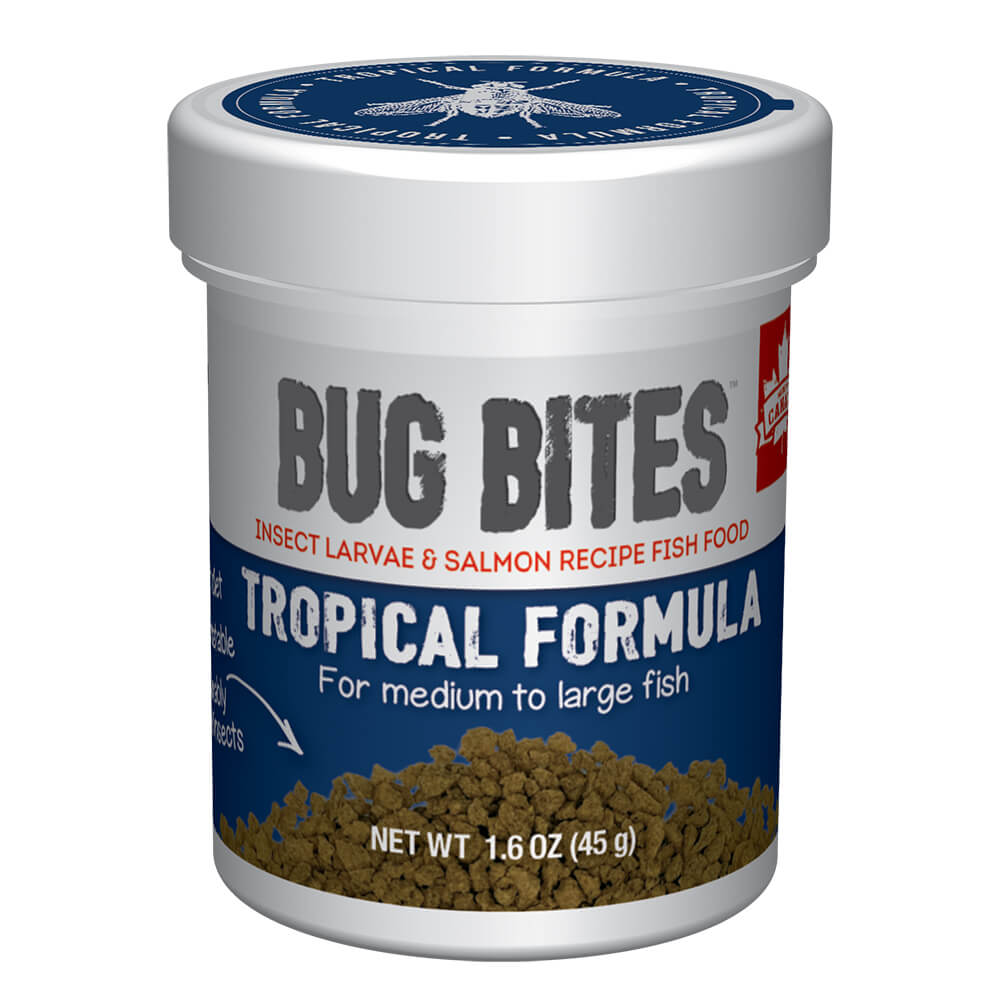
Bug Bites Shrimp Micro Granules, 30g
Item Number: A6931
UPC Code: 015561169318
Description
Bug Bites are formulated to address the natural, insect-based feeding habits of fish and include a balanced mix of premium proteins, vitamins and minerals for complete daily nutrition. This diet addresses the omnivorous feeding habits of all freshwater shrimp, and is enriched with vitamin D and calcium to help promote a strong exoskeleton as they are invertebrates (without a spine).
Features
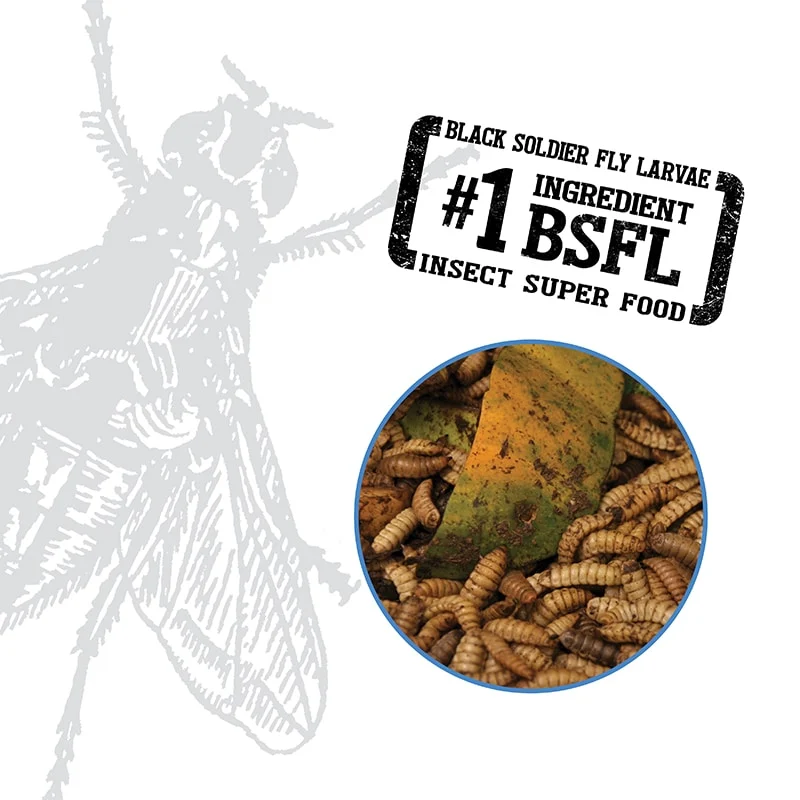
- As shrimp are invertebrates (without a spine), the exoskeleton serves to protect its body. For this reason, this formula is enriched with both vitamin D and calcium. A high concentration of Black Soldier Fly Larvae and Salmon (#1 and #2 ingredients) also ensure an enhanced growth rate and superior condition.
- Contains up to 32%, nutrient-rich Black Soldier Fly Larvae (#1 ingredient)
- High in multiple proteins (i.e. Whole Salmon – rich in Omega 3 and 6 for healthy skin, scales and fins)
- Fortified with essential vitamins, amino acids and minerals for a balanced daily diet
- Easily digestible
- Naturally palatable – a taste shrimp crave
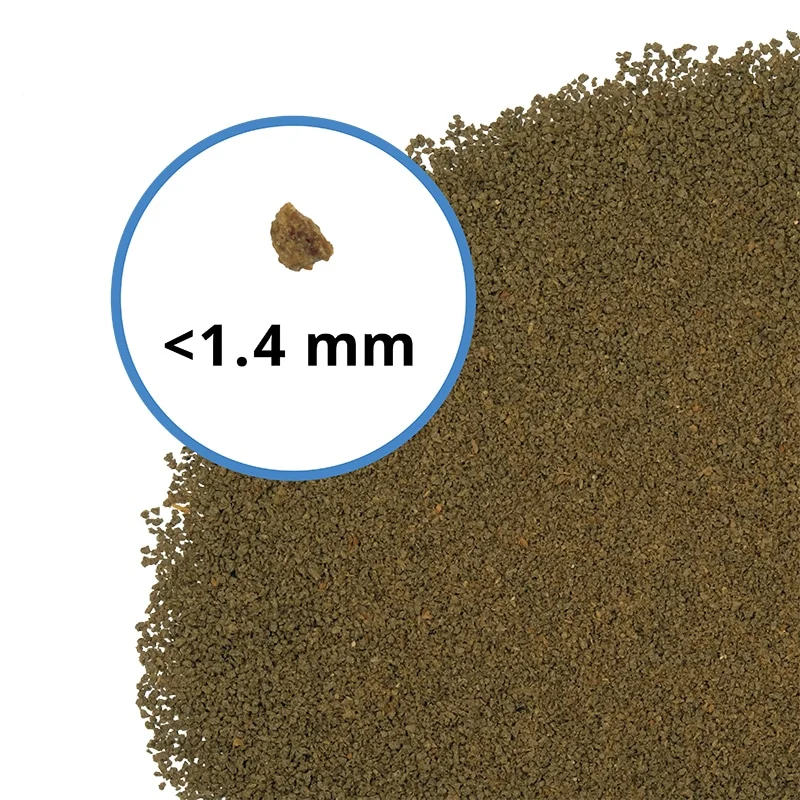
- Slow sinking micro granule format (0.25-1.0 mm) – all fish can feed at their preferred depth
- Sustainably processed in small batches for quality control and maximum freshness
- No artificial fillers, colors or preservatives
- Made in Canada
Label Info
Ingredients
- Black soldier fly larvae, salmon, wheat, green peas, potato, dicalcium phosphate, alfalfa nutrient concentrate, calcium carbonate, DL-methionine, lecithin, choline chloride, L-lysine, vitamin E supplement, biotin, niacin, calcium L-ascorbyl-2-monophosphate, marigold extract, zinc oxide, manganous oxide, D-calcium pantothenate, vitamin B12 supplement, beta-carotene, rosemary extract, riboflavin, copper sulfate, pyridoxine hydrochloride, thiamine mononitrate, inositol, folic acid, vitamin A supplement, calcium iodate, sodium selenite, vitamin D3 supplement.
Guaranteed Analysis
- Crude protein (min) 32.0%, Crude fat (min) 12.0%, Crude fiber (max) 6.0%, Moisture (max) 10.0%, L-lysine (min) 2.5%, DL-methionine (min) 1.1%, Calcium (min) 1.5%, Phosphorus (min) 0.8%, Vitamin A (min) 2500 IU/kg, Vitamin D3 (min) 600 IU/kg, Vitamin E (min) 75 IU/kg.
Feeding Instructions
- Feed as much food as shrimp can eat in two minutes, once daily.
Storage Instructions
- After opening, store in a cool dry place. See back of pack for best before date.
Questions & Answers
Sticks do not disintegrate rapidly and as such do not pollute the aquarium. They can be broken into smaller pieces and offered to small and large fish alike. The sinking formulas are ideal for bottom feeding and nocturnal species, whereas the floating formulas are ideal for surface feeders. Pellets, granules and micro granules are available in floating, slow sinking, and sinking formulations, and as such are suitable for a wide variety of feeding habits. They possess high nutritional densities as a result of the extrusion process and are ideal for fish with high metabolisms. Additionally, they are most compatible with automatic feeders.
Copper is a necessary trace element that should be included in crustaceans’ diets, as it is required in the biological metabolic processes that occur when the animals shed their exoskeletons as they grow. Beyond this, micro-elements or trace minerals such as chromium, cobalt, copper, iodine, iron, manganese, molybdenum, selenium and zinc are required in small quantities and participate in a wide variety of biochemical processes . They are involved in cellular metabolism, the formation of skeletal structures, the maintenance of colloidal systems, the regulation of acid-base equilibrium, immunity enhancement, stress release, disease resistance and other physiological functions. They are also important components of a number of hormones and enzymes.
The salmon used in Bug Bites is farmed and has received MSC (Marine Stewardship Council) certification.
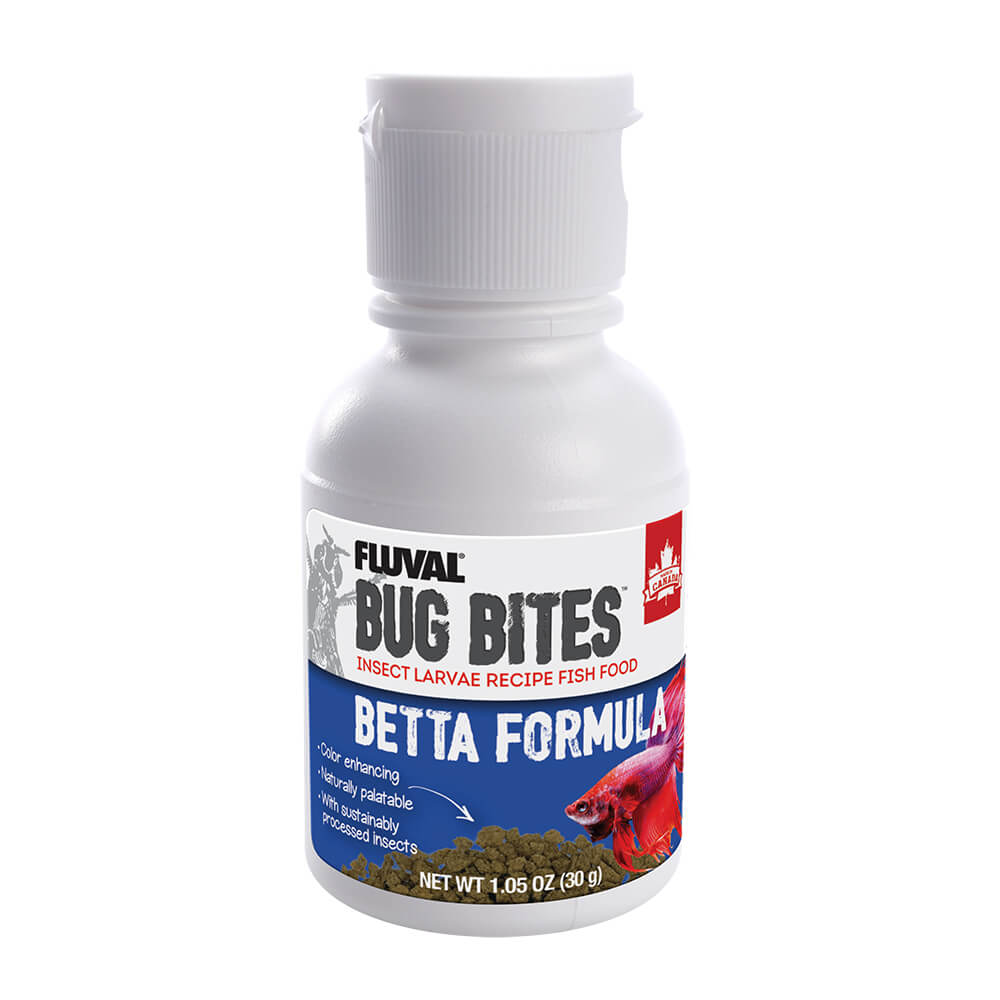
We recommend feeding Bug Bites Betta formula as a staple daily diet, but it is beneficial to vary your Betta’s diet with frozen shrimp, glassworms and bloodworms. Additionally, we recommend Fluval Color Enhancing formulas, which include 25% krill, an excellent palatability enhancer that also dramatically improves fish colors.
You can expect to wait a few days to a couple of weeks until some fish consume pellets with the same vigor as they did when fed flakes. Like most animals, a change in food format may require an adjustment period.
Fluval offers sinking pellets and sticks that are available in various sizes. By feeding a few pellets instead of a single, larger tablet, you can achieve a better distribution of food throughout the aquarium, making it more available to all your fish.
Spirulina provides a rich source of mucoproteins which enhance a fish’s protective mucous layer, which benefits their skin, scales and fins. Furthermore, this can help prevent disease and gives the fish a glossier, healthier appearance.
For optimal nutritional value, a container of fish food should be consumed by your fish within a period of 6 months. During this time, it is best to keep it in a cool, dry location.
A few vitamins may be less present after the best before date, but you can still safely use the food for another two months or so. We recommend feeding within the expiry date to ensure maximum freshness and nutritional value.
Fluval Color Enhancing formula includes a high concentration of krill, which is highly palatable and a natural color-enhancer for fish.
No. Feed active species a little less per meal and add feeding periods thoughout the day – 3 feedings a day is recommended. Additionally, observe the stomachs of your fish – slightly curved bellies are ideal.
Fluval fish foods are not meant for human consumption. Allergic reactions to various ingredients are a potential risk for any food, human grade or not. While they are generally safe, we strongly recommend storing your fish food out of the reach of any young children, and contacting your local health professional for further guidance.
Using the bottle cap method to feed fish will help control portions and prevent overfeeding. Your fingers should not come into contact with the food, as they can potentially contaminate it with the bacteria, oils, creams, etc. often found on our hands.
<iframe width="100%" height="439" src="https://www.youtube.com/embed/BssWx98i9kA" title="HOW TO: Feed Aquarium Fish" frameborder="0" allow="accelerometer; autoplay; clipboard-write; encrypted-media; gyroscope; picture-in-picture; web-share" referrerpolicy="strict-origin-when-cross-origin" allowfullscreen></iframe>
<iframe width="100%" height="439" src="https://www.youtube.com/embed/fSHlOGoNq6g" title="Aquarium Fish Feeding Tips" frameborder="0" allow="accelerometer; autoplay; clipboard-write; encrypted-media; gyroscope; picture-in-picture; web-share" referrerpolicy="strict-origin-when-cross-origin" allowfullscreen></iframe>